

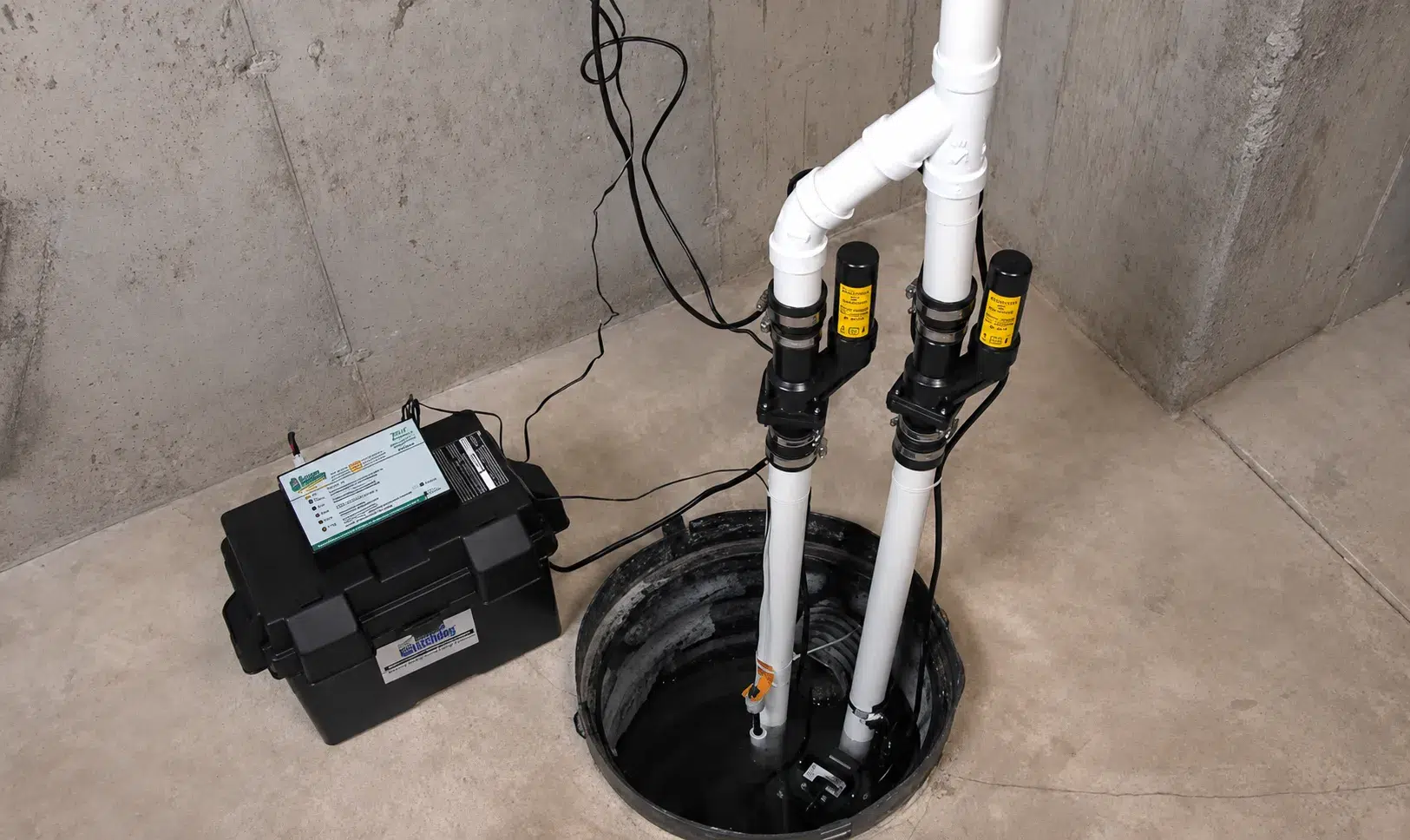


For most Seattle homes with a basement and a working sump pump, the honest answer is yes – and the reason is simple. Seattle’s heaviest rain and strongest windstorms often overlap in the same season, which means sump pumps may be working hardest during the same period when storm-related outages are more likely. A professional installation of a sump pump battery backup can help keep your basement dry during those few hours when the grid is down, and rain keeps adding water to the pit.
Key Takeaways:
- A battery backup usually runs a secondary pump when the main pump loses power, which in Seattle often happens during winter storm season.
- A battery backup is not the same as a second grid-powered pump: a battery backup usually adds a secondary pump with independent power, while a second AC pump still depends on household electricity.
- A typical battery backup sump pump may run for several hours of continuous pumping or longer with intermittent cycling.
- Many existing pits can accept a backup pump, but the basin must have enough room and depth for the secondary pump, float switch, and proper discharge setup.
- Battery type drives the cost, the lifespan, and how much upkeep you’ll deal with.
How Does a Battery Backup Sump Pump Work?
The setup is more straightforward than people expect. Alongside your main pump sits a secondary battery-powered sump pump, connected to a charged battery kept in a nearby battery box or approved location. While the power is on, the battery simply sits there topped up by a charger. The moment the main pump loses electricity, and the water keeps rising, a float switch triggers the backup, and it starts pumping on stored battery power instead of the grid.
So when someone asks how a battery backup sump pump works, the short version is this: it is an independent pump that turns on when its float switch detects rising water, usually because the primary pump has lost power, failed, or cannot keep up. It doesn’t share the main motor or its power source. That independence is the whole point: if a power outage or primary failure stops the main pump, the backup can still run.
Battery Backup vs. a Second Pump: What’s the Difference?
This trips up a lot of homeowners, so it’s worth being clear. A battery backup for a sump pump protects against power loss, but because it usually includes a separate secondary pump, it can also help if the primary fails or cannot keep up. A second primary pump (a twin on the same circuit) solves a different problem: the main one dies while the power is still on.
In reality, they guard against different failures. If your main pump burns out on a dry July afternoon, a battery backup on a charged battery will still cover you, because it’s a separate pump. But two grid-powered pumps on the same dead circuit both go silent in an outage. From a plumber’s perspective, a home that floods often enough may want both, but if you’re choosing one, backup power for a sump pump protects against a very common Seattle risk: a storm-related outage while water is still entering the pit.
What Happens During a Power Outage Without a Backup?
If you only have a standard electric sump pump and no backup system, nothing runs once the power goes out. That’s the blunt reality. Water can keep entering the pit; the basin fills, and once water rises above the top of the basin, it can spread across the floor.
People often ask how long a sump pump can go without power before there’s trouble, and the honest answer is: it depends entirely on how fast water is coming in. During a heavy Seattle downpour, a pit that normally cycles every couple of minutes can overflow in 20 to 30 minutes once it stops. On a dry day, you might go a long while with no issue at all. The danger is that outages and downpours tend to arrive together here, so you rarely get the easy version.
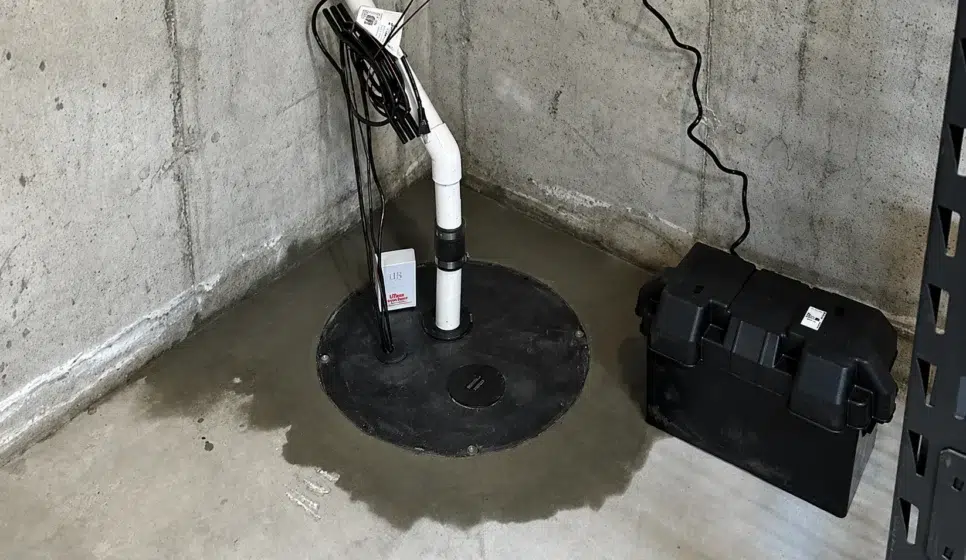
Signs You Need a Battery Backup Sump Pump
Not every home needs one, but several situations make a strong case. If a few of these sound like yours, an emergency backup sump pump is worth serious thought.
- Your pump runs often in winter. A pit that cycles every few minutes during a storm is telling you the groundwater is high and it’s the only thing holding the water back.
- You’ve lost power during a storm before. If winter outages are normal on your street, you already know the risk window.
- Your basement is finished. Drywall, flooring, and stored belongings can turn a wet floor from a nuisance into a much more expensive cleanup and repair.
- The house sits empty during the day. If it fails while you’re at work or away, a basement can flood for hours before anyone notices.
- You’re below the water table. Older Seattle neighborhoods on low or sloped lots often have pits that never really rest.
Sump Pump Battery Backup Options: Which Type Is Right for You?
The pump matters, but the battery is what determines how long you’re covered, how often you’ll service it, and what you’ll spend. There are several sump pump battery backup options, from traditional deep-cycle lead-acid and AGM batteries to newer lithium systems, and they differ in cost, maintenance, compatibility, and lifespan.
| Battery Type | Lifespan | Maintenance | Best For |
| Deep Cycle (Marine) | 3–5 years | Higher – check fluid, ventilate | Budget builds, occasional outages |
| Sealed AGM | 4–7 years | Low – sealed, no fluid checks | Most homeowners, balanced choice |
| LiFePO4 (Lithium) | 8–10+ years | Very low | Long-term value, frequent use |
Deep Cycle (Marine) Battery Systems
A deep-cycle battery for sump pump use is the old standard, borrowed straight from boats. It’s the cheapest way in, and it delivers real runtime, which is why a marine battery for sump pump backup is still common. The trade-off is upkeep: many flooded lead-acid batteries, so you’ll check fluid levels, keep the area ventilated, and accept a shorter life. For a homeowner who rarely loses power and wants protection on a budget, it’s a reasonable starting point.
Sealed AGM Battery Systems
AGM (absorbed glass mat) is the middle ground most people land on, and for good reason. It is sealed and does not require fluid top-offs, but you should still follow the manufacturer’s ventilation and safety instructions, especially in a finished basement. It costs more than a flooded marine battery but usually requires less routine maintenance, though the backup system still needs regular testing and safety checks. If you want something you can install and largely forget about, this is usually our recommendation.
LiFePO4 (Lithium) Battery Systems
Lithium iron phosphate is the premium tier, and the numbers explain why. It can last two to three times longer than lead-acid, weighs a fraction as much, holds its charge better, and shrugs off deep discharges that would ruin a marine battery. The catch is the upfront price. Over a longer ownership period, lithium can be a better value for some homes, especially where it runs often. If you plan to stay in the house and your pit works overtime, the math frequently favors it.

Sump Pump Battery Replacement: When and How
Here’s the part homeowners forget: a backup is only as good as the battery in it, and batteries die quietly. Sump pump battery replacement is not something to put off – it is the maintenance that keeps the whole backup system reliable. We’ve checked plenty of backup systems where the pump was fine, but the nearby battery was dead – a problem discovered only after the basement flooded.
A few signs it’s time to replace your sump pump battery: the system is past its rated lifespan for that battery type, the charger shows a fault or low-voltage warning, the battery won’t hold a charge during a test, or the case looks swollen or corroded. As a rule, test the backup at least twice a year and follow the manufacturer’s instructions; depending on the system, that may involve simulating rising water or briefly disconnecting primary power to confirm the backup pump activates.
When it comes to a sump pump backup battery replacement, match the new battery to your system’s specs – voltage, capacity, and type. Switching from a flooded marine battery to a sealed AGM may be an upgrade, but only if your backup system and charger are approved for that battery type, voltage, and capacity. If you’re unsure, that’s a quick thing to confirm before you buy.