


Sewer lines can last anywhere from a few decades to 100+ years, and the biggest variable is what the pipe is made of. A properly designed and installed modern plastic sewer line can provide a service life measured in many decades, and some PVC systems are expected to exceed 100 years under normal conditions. A mid-century fiber line might already be living on borrowed time. So when people ask how long sewer pipes last, the honest reply is another question: what’s yours made of, and how old is it?
That’s what this guide answers, material by material. Over 25 years of sewer camera inspections across Seattle, we’ve pulled footage from nearly every kind of line still in the ground here – and the sewer pipe material tells us more about a line’s remaining life than almost anything else.
Key takeaways:
- Material sets the baseline lifespan; soil, roots, and installation adjust it up or down.
- Homes built before 1970 in Seattle may have clay, cast iron, or Orangeburg lines, and those materials deserve closer inspection because age, roots, corrosion, and soil movement can affect their condition.
- Modern PVC and HDPE lines are often expected to last 100 years or more under proper conditions.
- Age alone doesn’t mean failure. A camera inspection tells you the real condition.
Sewer Pipe Lifespan by Material
Before we go deep, here’s the quick reference. These are the types of sewer pipe material you’re likely to find under a Seattle property, with realistic lifespans rather than best-case brochure numbers.
| Material | Typical lifespan | Commonly installed |
| Clay (terracotta) | 50–75 years (up to 100 in ideal soil) | Pre-1970s |
| Orangeburg | 30–50 years, often less | ~1940s–1970s |
| Cast iron | 75–100 years rated, 50–75 in practice | 1950s–1980s |
| ABS | 50–80+ years | ~1975–1990s |
| PVC | 100+ years | 1980s–present |
| HDPE | 100+ years | Trenchless/modern |
A quick note on reading this table: the ranges assume decent installation and average ground conditions. In reality, a tree-lined lot or a high water table can knock decades off the low end.
Clay Sewer Pipes
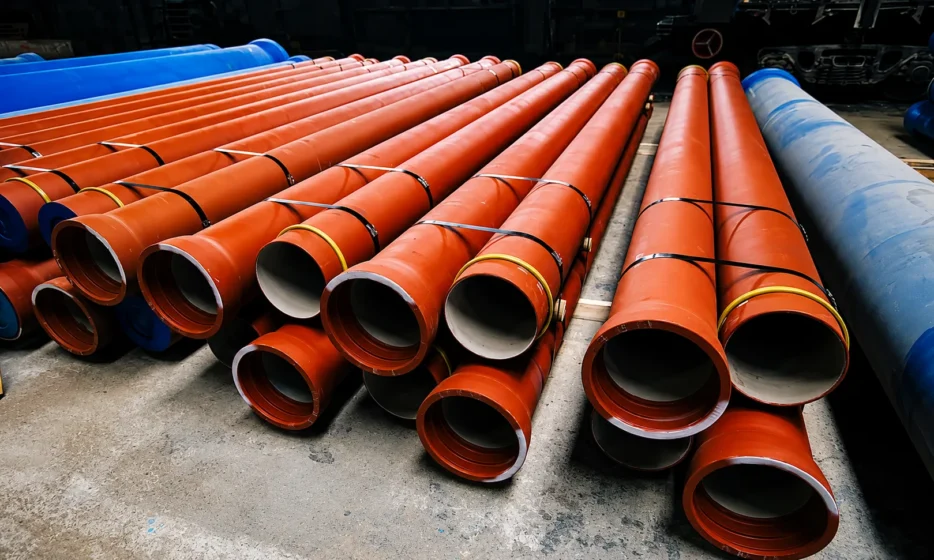
If your home predates the 1970s, there’s a good chance the original line is clay sewer pipe. It was the workhorse material for generations – fired, durable, and chemically inert. Clay doesn’t rust, doesn’t corrode, and shrugs off most of what flows through it. Its weakness is mechanical: it’s rigid and brittle, and it joins in short sections, which means lots of seams.
How Long Do Clay Sewer Pipes Last?
In practice, clay sewer pipe life expectancy runs about 50 to 60 years, though we’ve scoped clay lines well past 80 that were still holding. The pipe body itself can last a century. What usually fails first is the joints – they crack, shift with the soil, and roots find the gaps. In Seattle’s wet, tree-lined yards, joint intrusion is one of the most common reasons an older clay line starts causing repeated problems.
When Did They Stop Using Terracotta Pipes?
First, a small myth to clear up: terracotta sewer pipe and clay pipe are the same thing. “Terracotta” just means fired earth. For residential lines, clay sewer pipes were gradually phased out through the 1960s and 1970s as plastic took over – cheaper, lighter, and easier to install. Vitrified clay is still manufactured today, though, for some municipal mains.
Orangeburg Pipes
This is the one that makes plumbers wince. Orangeburg pipe showed up as a cheap, easy-to-install option, especially during and after World War II, when metal was scarce. It was marketed as a bargain. Decades later, that bargain has cost a lot of Seattle homeowners a full line replacement.
What Is Orangeburg Pipe Made Of?
Here’s the part that surprises people. Orangeburg pipe is made of wood pulp and cellulose fiber bound together with coal-tar pitch – a bituminized fiber, not a hard ceramic or metal. Functionally, it’s layered tar paper rolled into a tube. Sturdy enough when new and dry, far less so after years buried under wet soil.
How Long Does Orangeburg Pipe Last?
The Orangeburg pipe lifespan is short by sewer standards: 30 to 50 years, and plenty of it never made it that far. The material softens over time and loses its round shape, so a line can deform long before it technically “fails.”
Orangeburg Pipe Problems: Why It Is the Most Problematic Material in Seattle Homes
The classic Orangeburg sewer pipe problems are bellying, blistering, and outright collapse. Because the walls go soft, the pipe sags into low spots where waste pools, then deforms into an oval and finally caves in. Orangeburg is often a poor candidate for relining, especially when it is ovaled, softened, or collapsed, but a camera inspection is needed because some structurally stable sections may still be candidates for lining. By the 1970s, Orangeburg had largely fallen out of use as plastic pipe became more common and the material’s long-term weaknesses became harder to ignore. If your home is from that era and the line has never been scoped, this is not a wait-and-see situation.
Cast Iron Sewer Pipes
Cast iron was the premium choice for much of the 20th century, and you’ll often hear it called cast iron soil pipe – “soil pipe” being the old trade term for a drain line carrying waste. It’s heavy, dense, and quiet under load. Installed well, it can last for generations.
How Long Does Cast Iron Pipe Last Underground?
The rated lifespan of cast iron pipe is 75 to 100 years. The real-world number can be lower – often closer to 50 to 75 years in problem conditions – because cast iron may deteriorate from internal corrosion, external soil conditions, or both. Buried in Seattle’s damp, sometimes acidic soil, the metal degrades faster than the brochure suggests.
Do Cast Iron Pipes Rust and Corrode?
Yes, and that’s the whole story with this material. Cast iron pipes do rust – from the inside out. Waste and moisture eat at the wall, scale builds up, the channel narrows, and flow slows to a crawl. By the time cast-iron sewer pipe corrosion shows up as a slow drain or a faint smell after rain, a camera often finds walls shedding rust like old paint. Some lines hold up past 70 years in drier ground; others give out at 45, where the water table stays high.
ABS Sewer Pipes
When plastic arrived, the first widely used version was ABS pipe – the black plastic you’ll spot in homes built from the mid-1970s on. It’s light, easy to cut, and reliable, with a lifespan in the 50-to-80-plus-year range.
Why Is ABS Pipe No Longer Used?
It hasn’t vanished, but its dominance faded, and the reasons are worth knowing. ABS pipe is made of acrylonitrile butadiene styrene – a solid, durable plastic on its own. What pushed it aside was a mix of things: PVC took over new construction, some defective batches in the 1980s cracked at the joints, and tightened fire codes counted against a plastic that burns more readily. It’s still permitted in many areas for approved drain and vent work, including some underground uses, but local sewer requirements decide where it can go.
PVC Sewer Pipes
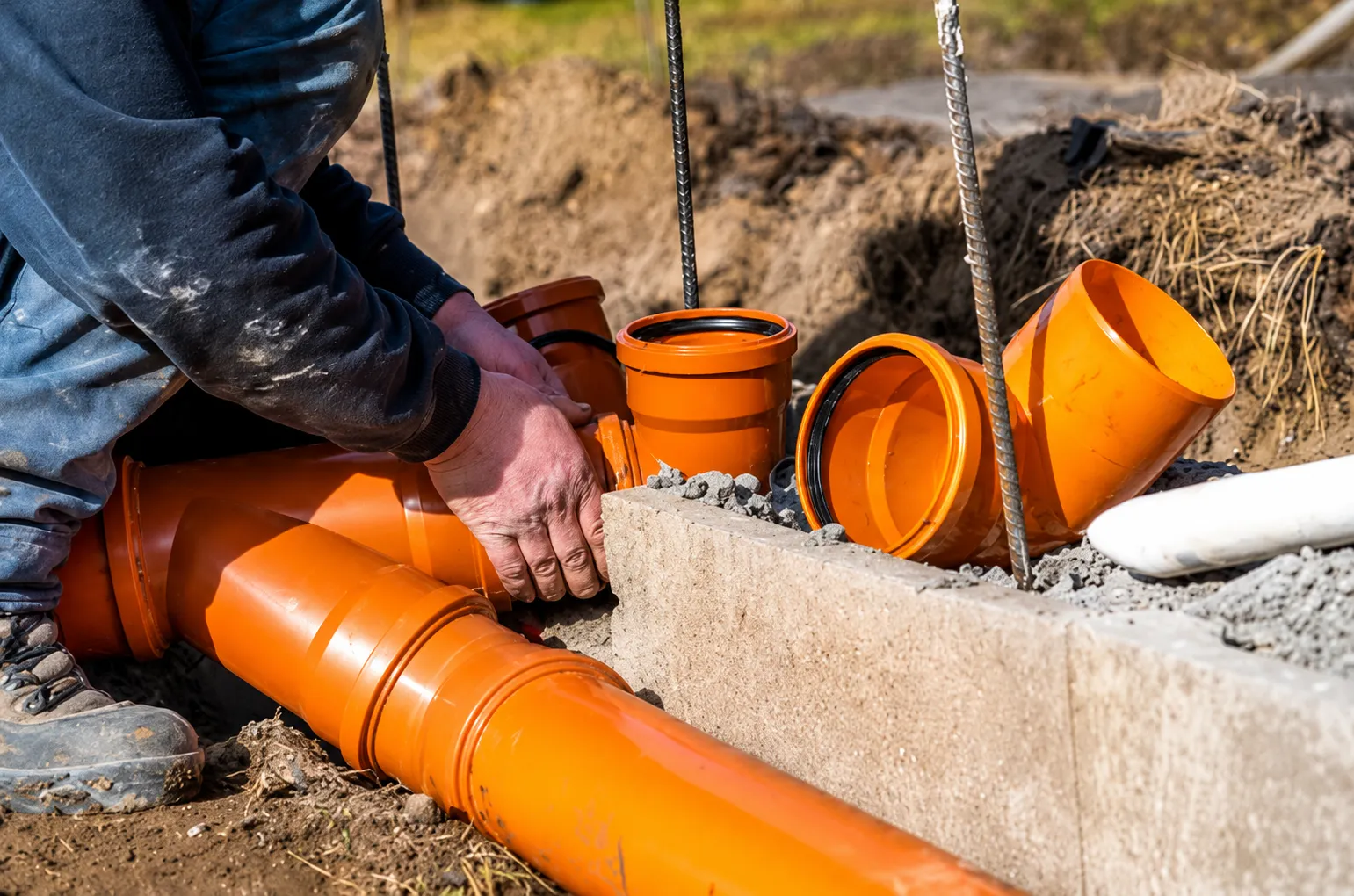
Today, PVC sewer pipe is the default for new and replacement lines in Seattle, and for good reason. It resists corrosion, has smoother and more root-resistant joints than many older segmented materials, and is less brittle than clay when properly installed.
How Long Does PVC Sewer Pipe Last?
PVC has one of the longest expected lifespans among common sewer pipe materials, often cited at 100 years or more under normal conditions. The main caveats are installation-related: bad slope or sloppy joints can sink an otherwise excellent pipe.
What Is Schedule 40 PVC Pipe?
This trips people up, so here’s the plain version. Schedule 40 PVC pipe isn’t a different material – “Schedule 40” describes the wall thickness for a given diameter. Schedule 40 is a common PVC wall-thickness specification, but Seattle side sewer requirements distinguish between SDR 35 PVC for deeper cover and Schedule 40 PVC for shallow cover. Schedule 80 is thicker and built for higher-pressure jobs you won’t typically see in a home sewer. It is the same plastic material with a different wall thickness.
HDPE Sewer Pipes
The newer arrival is HDPE pipe – high-density polyethylene – and it’s become the go-to for trenchless work. It bends with shifting soil instead of cracking, and its joints are heat-fused into one continuous run, which leaves almost no entry point for roots.
How Long Does HDPE Pipe Last?
Estimates for HDPE pipe lifespan run to 100 years or more, on par with PVC. Its flexibility is the standout trait: where a rigid line might crack under ground movement, HDPE tends to bend and recover. That’s why it’s a favorite for pipe bursting, where a new line gets pulled through the path of an old one.
How to Find Out What Sewer Pipe Material You Have
You’ve got a few ways to answer “what material are my sewer pipes made of,” from easiest to most reliable. Start with the home’s age: a build date tells you which era’s materials were standard. Check inspection reports or old permits, which sometimes list the sewer line material outright. Look at any exposed sections near the cleanout or in the basement – black plastic, white plastic, dull gray metal, and reddish-brown clay all look distinct.
The definitive method, though, is a camera inspection. A plumber threads a waterproof camera down the line, and you see the material, the joints, and any damage in real time. It’s the only way to know condition, not just a probable type.

Your clay, cast iron, or Orangeburg line deserves a proper look before it fails.
Sewer Line Maintenance: How to Extend the Life of Your Pipes
No material lasts forever, but good sewer line maintenance can help any line reach the higher end of its expected lifespan. A few habits do most of the work. Schedule a camera inspection every few years, especially on older lines, so small problems surface before they become emergencies. Keep grease, wipes, and “flushable” products out of the drains. If you’ve got mature trees near the line, stay ahead of root intrusion with periodic cleaning.
When the time does come, choosing the best sewer pipe material for a replacement depends on the method and local requirements: PVC is common for open-trench side sewer replacement in Seattle, while HDPE or other approved fusible pipe systems are often used for pipe bursting. Both are highly corrosion-resistant and can provide a service life measured in decades, with many PVC and HDPE systems designed or expected to reach 100 years or more under proper conditions. Knowing you eventually have to replace the sewer line isn’t bad news – it’s a chance to drop in a material that should outlast your time in the house.