



There’s no gentle way to put this: sewer line problems are expensive, disruptive, and they don’t get cheaper the longer you wait. If your drains are backing up, your yard smells like something died, or a camera inspection just revealed a crack 6 feet underground, you need to know what you’re facing financially before you make any decisions.
At Ben’s Plumbing, we’ve been diagnosing and repairing sewer lines across Seattle for over 25 years. We’ve worked on everything from 100-year-old clay pipes in the Central District to modern PVC systems in new Shoreline developments. This guide reflects what sewer work actually costs in Seattle in 2026 – based on the jobs we quote and complete every week.
Average Sewer Line Repair Cost
Let’s start with the number everyone wants. What’s the average cost of sewer line repair? In Seattle, most residential sewer repairs land between $2,500 and $8,000. That’s a wide range, and for good reason – a localized joint repair and a full-line replacement are completely different jobs.
Typical Price Range for Residential Properties
Here’s how the most common sewer jobs break down for a typical Seattle single-family home:
| Type of Repair | Typical Cost Range |
|---|---|
| Spot repair (single section, accessible) | $1,500 – $4,000 |
| Partial line repair (10 – 20 feet) | $3,000 – $7,000 |
| Full line replacement (30 – 80 feet) | $6,000 – $20,000+ |
| Trenchless repair or replacement | $4,500 – $16,000 |
| Emergency repair (after-hours, urgent) | Add $500 – $2,000+ |
These numbers include labor, material, and standard permitting. They don’t include landscaping restoration, sidewalk or driveway repair, or interior plumbing work that might be needed after the main line is fixed.
Cost Per Foot Breakdown
Many Seattle plumbing companies calculate sewer repair costs based on linear footage once the scope is clearly defined. In 2026, expect:
- Traditional trenching: $80 – $250 per foot
- Trenchless (pipe lining): $100 – $250 per foot
- Trenchless (pipe bursting): $100 – $300 per foot
So the cost to replace 50 feet of sewer line using traditional excavation typically falls between $4,000 and $12,500, depending on depth, pipe material, and what’s sitting on top of the line.
Per-foot pricing sounds straightforward, but the real price depends on what the plumber runs into once work begins. A shallow line under a grass yard is a different animal than a deep line running beneath a concrete patio and a mature Douglas fir.
What Affects Sewer Line Repair Pricing
Sewer line repair cost estimates can vary by thousands of dollars between properties on the same block. Here’s why.
Type of Damage
A hairline crack that’s letting in groundwater is a simpler fix than a section that’s completely collapsed and full of soil. The type of damage determines the repair method – and the method determines the price.
Minor damage (small cracks, offset joints) can often be addressed with trenchless lining. Major damage (collapsed sections, multiple breaks) usually requires excavation and full pipe replacement. The worse the damage, the more labor-intensive the solution.
Depth and Accessibility of the Pipe
Seattle’s topography creates some interesting challenges. Sewer lines in hillside neighborhoods – Queen Anne, Beacon Hill, parts of West Seattle – can sit 8 to 15 feet deep in spots. Every additional foot of depth adds excavation time, shoring requirements, and cost.
Accessibility matters just as much. A sewer line running under an open backyard is far cheaper to reach than one buried beneath a driveway, a deck, or a detached garage. If heavy equipment can’t get close, manual digging adds significant labor hours.
Pipe Type
What your sewer line is made of affects both the repair approach and the price:
- Clay tile (common in pre-1960s Seattle homes): Brittle, prone to root intrusion and joint separation. Often requires full replacement.
- Cast iron (1950s – 1980s): Corrodes from the inside out. Repairs are possible but replacement is frequently the better long-term investment.
- Orangeburg (tar paper pipe, post-WWII): Collapses under soil pressure. Almost always needs full replacement – there’s no reliable way to repair it.
- PVC/ABS (1980s – present): Most durable option. Spot repairs are straightforward and cost-effective.
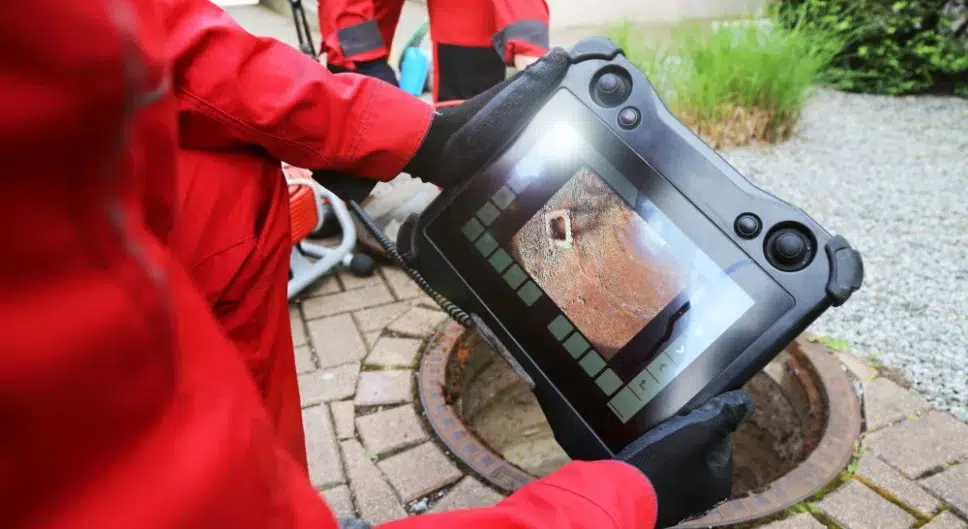
If your home was built before 1970, there’s a good chance your sewer line is clay or early cast iron. A camera inspection typically runs $250 – $600 in the Seattle area and clarifies the pipe condition before excavation begins.
Permits and City Requirements
Seattle requires permits for most sewer line work, and the city’s inspection process adds both time and cost. Permit fees typically run $300 – $1,000+, depending on the scope. Side sewer work in the public right-of-way involves additional requirements from Seattle Public Utilities, including traffic control and specific backfill standards.
None of this is optional. A plumber who skips permits is saving themselves time at your expense – unpermitted sewer work can create serious problems when you sell the house.
Cost by Type of Sewer Problem
Different problems call for different solutions at different price points. Here’s what we see most often.
Collapsed or Broken Sections
A collapsed sewer line is the most urgent and typically the most expensive problem. The pipe has lost its structural integrity – sewage has nowhere to go, and soil is filling the void.
The repair cost for a collapsed section runs $3,000 to $8,000+ for a localized dig-and-replace. If the collapse extends across a longer stretch, you’re looking at main sewer line replacement cost territory – $6,000 to $20,000+, depending on length and depth.
Pipe bursting sewer line replacement cost – a trenchless method where a new pipe is pulled through the old one, shattering it outward – typically runs $120 to $350 per foot. It’s a strong option when the existing line is relatively straight, and there’s enough depth for the equipment to work.
Tree Root Intrusion
Seattle is full of beautiful, mature trees – and their roots are relentless. Root intrusion is the single most common sewer problem we see in established neighborhoods.
The main sewer line clog repair cost when roots are involved depends on the severity. A mechanical root cutting (essentially a powered auger) runs $300 to $600 and clears the immediate blockage. But roots grow back. If the pipe has cracks or separated joints where roots keep entering, you’ll need either a spot repair ($1,500 – $4,000) or lining to seal the entry points ($4,000 – $10,000 for a full line).
Hydrojetting – blasting roots out with high-pressure water – costs $350 to $800 and does a more thorough job than mechanical cutting. We often recommend it as a first step before deciding on permanent repairs.
Sagging or Misaligned Pipes
A “belly” in a sewer line – a low spot where the pipe has sagged – traps waste and water, creating recurring backups. Misaligned joints cause similar problems on a smaller scale.
Sagging pipes typically require excavation and regrading to correct the slope, though minor alignment issues may sometimes be addressed with localized repairs. You can’t line your way out of a belly – the pipe needs to be re-graded to restore proper slope. Expect $2,500 to $6,000 for a typical belly repair, depending on the length of the affected section and how deep it sits.
Sewer Line Leaks
Not every sewer problem announces itself with a dramatic backup. Sometimes it’s a slow leak – soggy patches in the yard, an unexplained smell near the foundation, or a pest problem that won’t quit.
Leak repairs range from $1,500 to $5,000 depending on location and method. The cost to replace a sewer line under a slab – when the leak is beneath your home’s concrete foundation – jumps to $5,000 to $15,000+ because of the interior demolition and concrete work involved. This is one situation where trenchless methods, when feasible, offer real savings.
The no-dig sewer pipe replacement cost using epoxy lining runs $80 to $200 per foot and avoids tearing up floors or landscaping. It’s not suitable for every situation – severely damaged or collapsed pipes can’t be lined – but when it works, it’s faster, cleaner, and often cheaper than traditional excavation.
Is Sewer Line Repair Covered by Insurance?
Here’s the short and frustrating answer: usually not. Many standard homeowner’s insurance policies exclude sewer line repair related to wear, aging, root intrusion, or soil movement, though coverage varies by carrier and policy. These are considered maintenance issues, not sudden or accidental events.
There are exceptions. If a sewer line breaks due to a covered peril – say, a vehicle drives over it and causes a collapse – your policy might cover it. Some insurers also offer optional sewer and water backup riders for an additional premium, typically $40 to $100 per year. It’s worth checking your policy and asking your agent specifically about sewer line coverage before you need it.
Seattle Public Utilities is responsible for the main sewer line in the street. But the side sewer – the line running from your house to the city main – is your responsibility. That’s the line that causes the vast majority of residential sewer problems, and it’s the one you’re paying to fix.
Repair vs Replacement: When Costs Increase
Sometimes a repair makes sense. Sometimes it’s just delaying the inevitable.
Our general guidance: if the damage is isolated to one section and the rest of the line is in decent shape on camera, a spot repair is the smart move. But if the inspection reveals problems in multiple locations – root intrusion at several joints, widespread corrosion, or an Orangeburg pipe that’s slowly flattening – sewer line replacement cost is the more honest conversation to have.
Trenchless sewer line replacement cost in Seattle runs $4,500 to $16,000 for a typical residential line. Traditional excavation and replacement falls in a similar range but can go higher when surface restoration (driveways, landscaping, sidewalks) is factored in.
An emergency sewer line repair – when sewage is backing into the house and you need someone there now – adds urgency pricing on top of whatever the repair itself costs. After-hours and weekend emergency calls typically start with a $500 to $1,500 premium before the actual work is quoted.
The best way to avoid emergency pricing? Don’t ignore the early signs. Slow drains throughout the house, gurgling toilets, sewage odors in the yard – these are your sewer line telling you something is wrong before it becomes a crisis.
Need to know what’s going on with your sewer line? Ben’s Plumbing offers camera inspections and honest assessments across the Seattle area. We’ll show you the footage, explain what we’re seeing, and give you a written estimate before any work begins. Call us or book online – we’d rather catch it early than dig it up later.