


If your tank takes more than a couple of minutes to refill, the cause is almost always on the water-supply side rather than anything serious inside the toilet. A few of these issues you can fix yourself in a few minutes; others point to a broader plumbing or water-pressure problem worth a professional’s eye and a proper toilet repair. Below, we’ll walk through what’s normal, what’s not, and how to fix it.
Key takeaways:
- A healthy tank refills in roughly 45 to 90 seconds – time yours to know whether it’s actually slow.
- Check the shutoff valve first: a half-open valve is the most common fix and takes seconds to rule out.
- If the tank isn’t refilling at all after a flush, the shutoff is almost certainly the place to start.
- Cleaning or replacing a worn fill valve resolves most genuine slow-fill cases and is well within DIY range.
- If the slow flow shows up at faucets too, not just the toilet, the problem is whole-house pressure or supply – call a plumber rather than touching the toilet.
How Long Should a Toilet Take to Fill?
Let’s set a baseline, because “slow” is relative. In most homes with normal water pressure, a toilet should refill in about 45 to 90 seconds. A bigger tank simply holds more water, so it naturally takes longer; low household water pressure slows the flow regardless of tank size. Either way, two to three minutes can be normal – but a noticeable change from your toilet’s usual refill time is still worth checking.
The table below is a quick gut check we use ourselves.
| Tank fill time | What it usually means |
| 45–90 seconds | Normal |
| 2–3 minutes | Acceptable for big or older tanks, or lower pressure |
| 3–5 minutes | Slow – worth a look |
| 10+ minutes | Something is clearly restricting the flow |
Anything past the three-minute mark is worth investigating. Once a fill creeps toward ten minutes or more, a part has failed, or a line is choked, and it won’t fix itself.
What Causes a Toilet to Fill Slowly? 5 Most Common Reasons
If you’re wondering why your toilet keeps refilling slowly, the issue usually traces back to one of five parts. Here they are, roughly in the order we run into them.
1. Faulty or Worn-Out Fill Valve
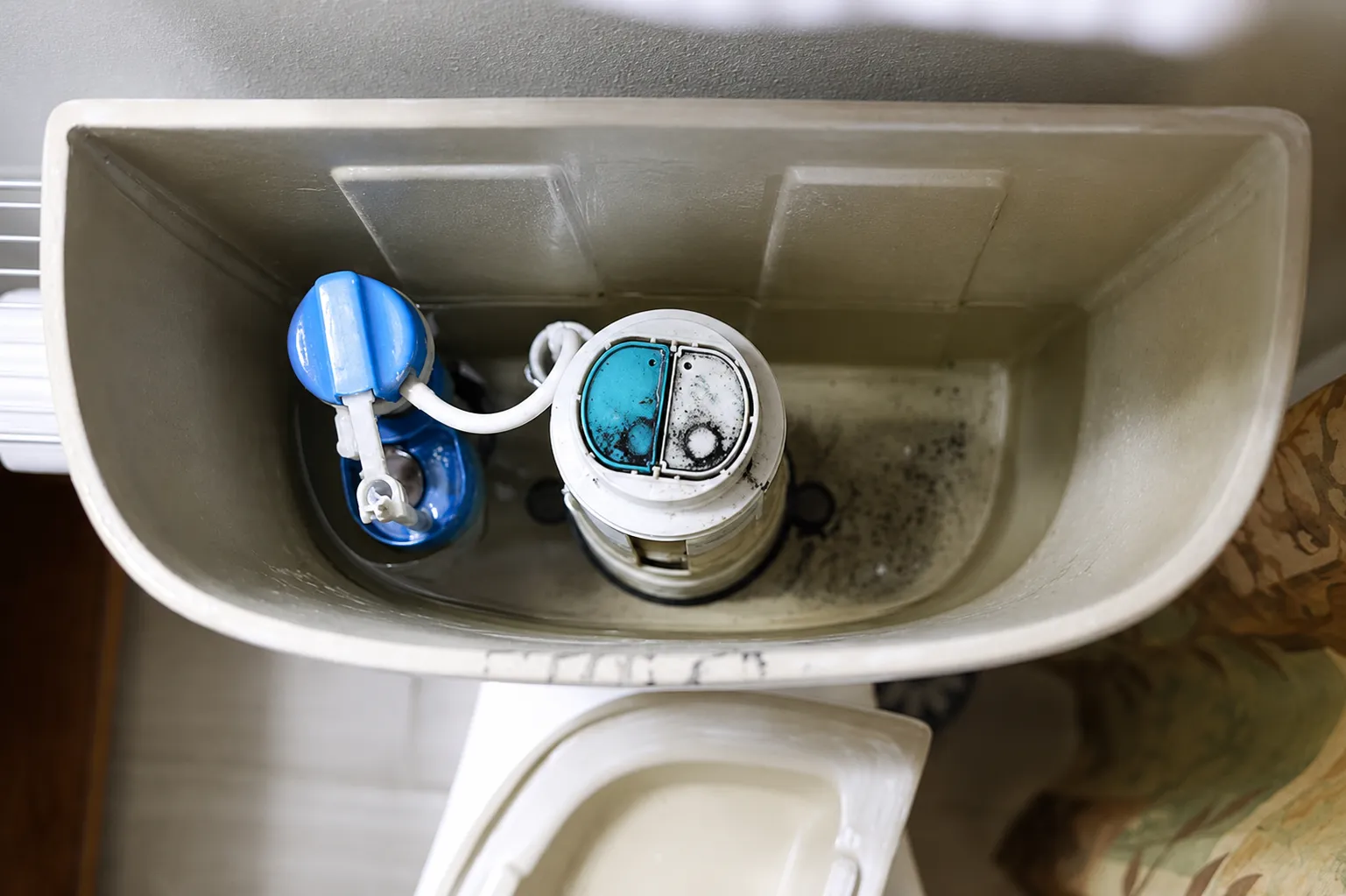
This is the usual suspect. The fill valve is the mechanism inside the tank that refills the tank and bowl after each flush. Over years of cycling, the internal seal and diaphragm wear out, and water trickles through instead of rushing in. When a toilet tank is filling slowly, but you can still hear water moving, a tired fill valve is the first thing to suspect. The part is cheap, and the failure is gradual, which is why people live with it far longer than they need to.
2. Partially Closed Shutoff Valve
Behind or beside the toilet is a small shutoff valve on the supply line. If it isn’t fully open – say, after a repair, an inspection, or someone bumping it while cleaning – it throttles the flow. We’ve seen plenty of cases where a toilet was slow to fill for weeks, and the entire fix was turning a valve a half-turn counterclockwise. It costs nothing to check, so always start here.
3. Mineral Buildup Inside the Fill Valve or Supply Line
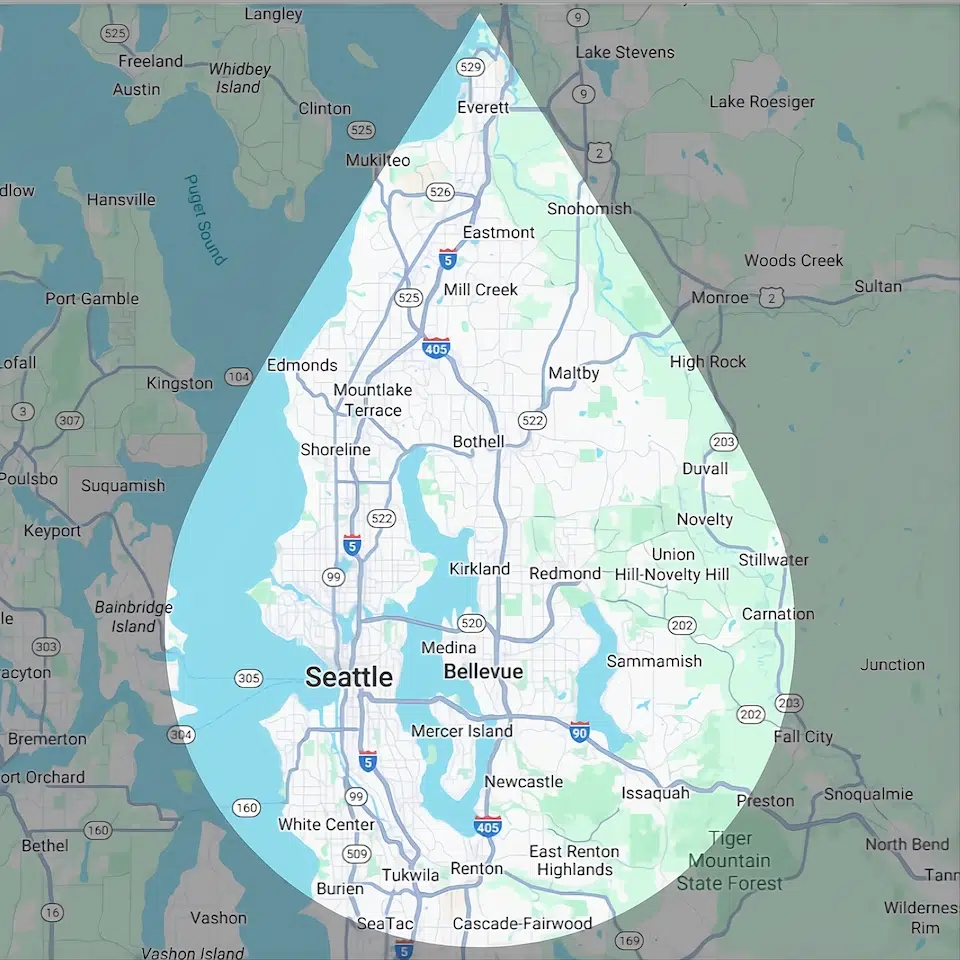
A toilet’s fill valve has a small filter screen, and when sediment or grit lodges in it, the flow slows to a dribble. There’s a local wrinkle worth knowing: Seattle’s water from the Cedar and Tolt sources is generally soft, so heavy mineral scale is rarely the culprit here, unlike in hard-water regions. The usual offender instead is loose debris – particles shaken out of old galvanized lines or stirred up by recent pipe work – which is why a toilet might not fill with water at its usual speed even in a soft-water home. Homes on outlying wells, by contrast, often see harder water and more buildup.
4. Low Water Pressure in Your Home
If the slow fill shows up everywhere – weak shower, sluggish faucets – the toilet isn’t the problem, the house is. Normal residential pressure runs 40 to 80 psi, and below about 40, things start to drag. When a toilet won’t refill quickly after a flush, and other fixtures feel weak too, test a nearby faucet before you touch the toilet. A whole-house pattern changes the whole diagnosis.
5. Damaged or Kinked Water Supply Line
The flexible hose connecting the shutoff to the tank can kink behind the bowl, or its internal liner can collapse with age. Either one chokes the flow. A delayed fill after every flush that started right after you moved the toilet or worked nearby usually points straight at a pinched or failing supply line.
How to Diagnose a Slow-Filling Toilet
Before fixing anything, spend two minutes narrowing it down. Lift the tank lid and watch a complete refill cycle – where the flow stalls tells you a lot. The table below maps the common symptoms to their likely cause.
| What you notice | Likely culprit | Quick check |
| Hissing, but the tank fills slowly | Worn fill valve | Watch the valve during a fill |
| Every fixture is sluggish | Low house pressure | Test another faucet |
| Started after water was shut off | Partly closed shutoff | Open the valve fully |
| Fill is weak and erratic | Kinked or aging supply line | Inspect the hose for bends |
| Gradual, only this toilet | Sediment in the screen | Clean the fill-valve filter |
If you’ve got one toilet that takes 20 minutes to fill while everything else in the house runs normally, you can safely rule out house pressure and focus on that toilet’s own parts.
How to Fix a Slow-Filling Toilet: Step-by-Step
Most of these you can do with a towel and an hour. Before you start to fix a slow-filling toilet, turn off the shutoff valve, flush to empty the tank, and keep a towel handy for drips.
Fix 1: Open the Shutoff Valve All the Way
Start with the freebie. Turn the shutoff valve fully counterclockwise until it stops. A valve that’s only half-open is a surprisingly common reason a toilet doesn’t fill up fast, and this takes five seconds. If that solves it, you’re done – no parts, no tools.
Fix 2: Clean the Fill Valve Filter Screen
Shut off the water, then remove the fill valve cap or filter according to the manufacturer’s instructions, since designs vary by model (most twist off a quarter-turn). Underneath is a small screen that traps grit. Rinse it, clear any debris, and reseat the cap. Briefly turning the water back on with the cap off can flush loose sediment out – aim a cup over it first. Clearing that screen is often the fastest way to make a toilet fill faster again.
Fix 3: Replace the Fill Valve
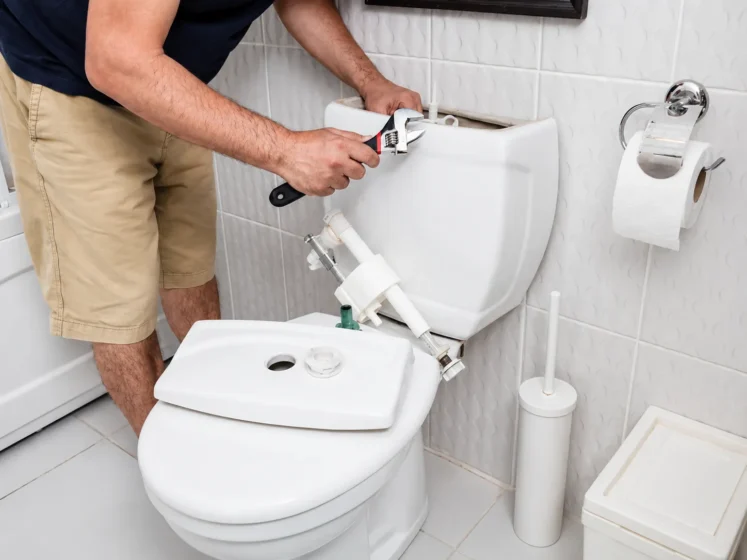
If cleaning doesn’t help, the valve itself is worn. A universal fill valve is usually an inexpensive hardware-store part, and many models can be installed in about 15 to 30 minutes by a confident DIYer. Shut off the water, disconnect the supply line, unscrew the lock nut under the tank, lift the old valve out, and drop the new one in. When the valve is shot, the toilet tank won’t fill with water properly, no matter how clean the screen is, so this is the real fix in most stubborn cases.
Fix 4: Check and Replace the Water Supply Line
Inspect the braided hose for kinks, bulges, or corrosion at the fittings. If it is pinched, corroded, or aging, replace it; a braided steel supply line is usually inexpensive and installs with basic hand tools. A failing line is an easy thing to overlook when a toilet tank isn’t filling with water after a flush, the way it used to.

We'll sort out the valve and pressure in one visit.
Why Your Toilet Bowl Stays Low After Flushing
A slow tank and a low bowl are two different problems, and people mix them up. If the tank fills fine but the bowl isn’t filling with water after a flush, the issue is usually the refill tube – the small hose that squirts water into the overflow pipe to restore the bowl level. If it’s popped out of the overflow tube or split, the bowl never gets its share.
Other possible causes include incorrect bowl refill adjustment, a restricted refill tube, a partial clog, or blocked rim jets that weaken the flush, so the exact symptom matters. A low bowl after every flush, paired with a weak swirl, often means the rim jets are scaled or blocked rather than anything wrong with the tank.
When to Call a Plumber for a Slow-Filling Toilet
DIY steps solve many slow-fill cases, but some situations call for a pro. If the slow fill is part of a whole-house pressure drop, or you’ve already replaced the fill valve and supply line and it’s still crawling, the issue is on the water-supply side and worth a professional look.
One caution, though: if the slow fill comes alongside gurgling drains, a bowl whose level keeps dropping, or slow drainage elsewhere in the house, you may be looking at a different problem entirely. Those are drain-and-vent symptoms, not supply ones – a sign the trouble has moved past the toilet tank to the drain line, which is a separate diagnosis.