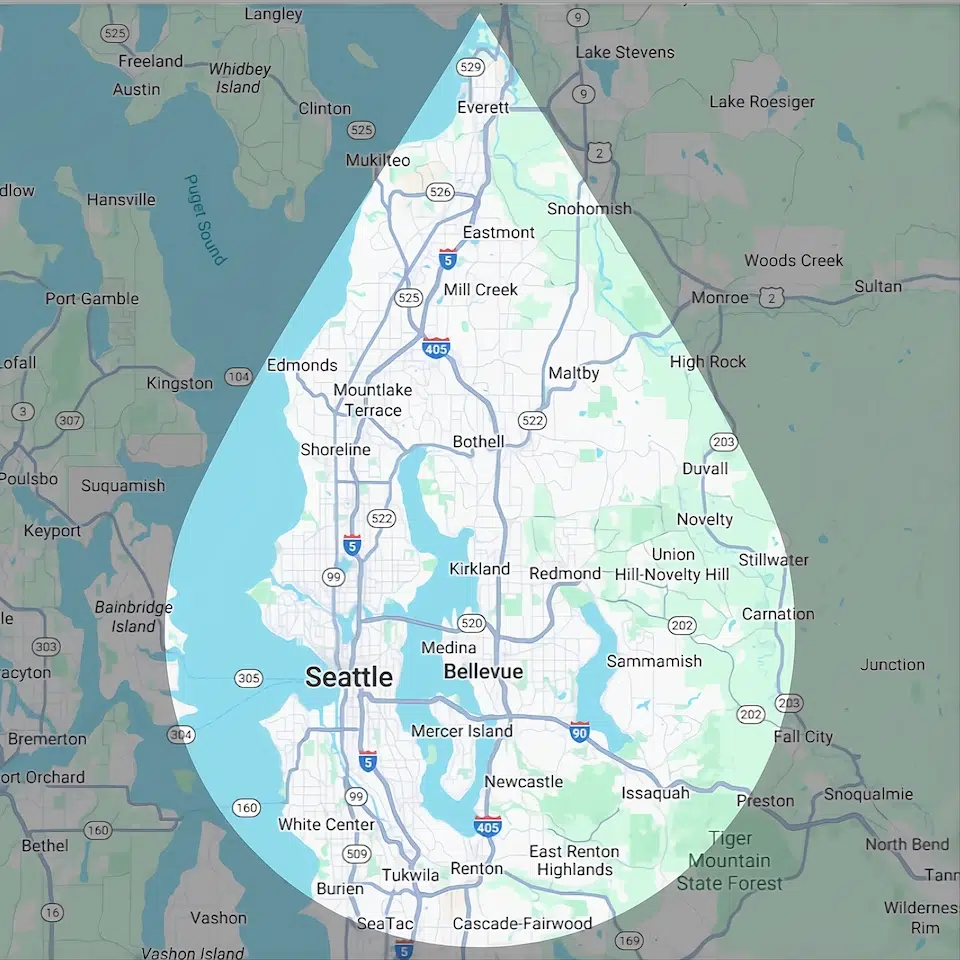



Plumbing failures rarely give advance warning. In most cases, the window between “something feels off” and “water is actively damaging the home” is measured in minutes – sometimes less. A recent service call in Kirkland is a good example of how quickly a manageable situation can escalate, and what makes the difference between a repair and a full remediation.
The Situation
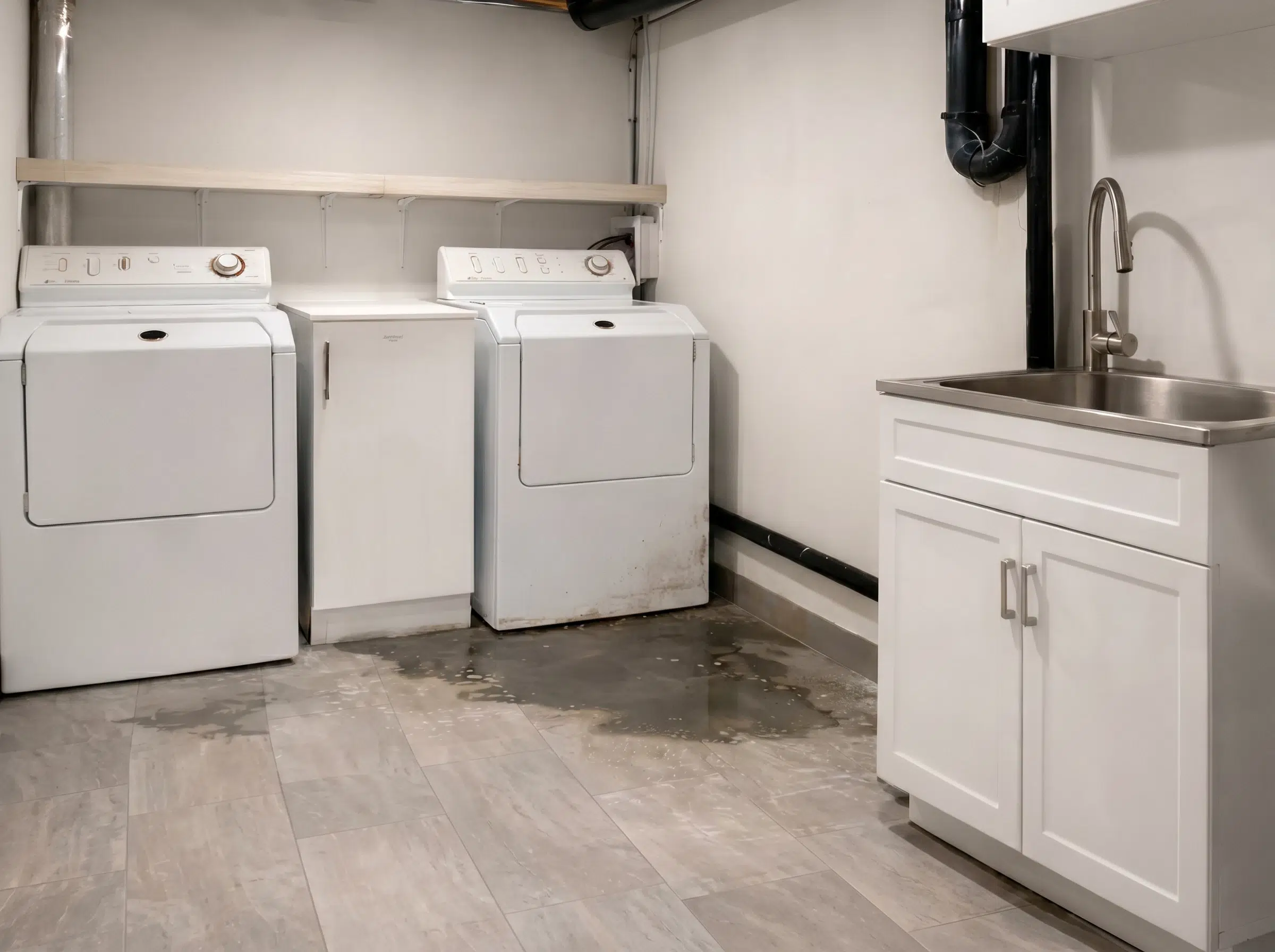
The homeowners contacted us after noticing reduced water pressure throughout the house. No visible leak, no obvious source – just a drop in flow that hadn’t been there the day before. By the time our crew arrived at the single-family residence, a section of aging copper pipe in the basement utility room had already failed completely.
The joint had been under cumulative stress for years – gradual corrosion combined with sustained water pressure that older pipe systems weren’t designed to handle indefinitely. When it gave, it gave without warning. Water was reaching the ceiling and saturating the surrounding drywall and insulation by the time the main supply was shut off.
This is exactly the scenario our leak detection service is designed to catch before it reaches this point – pressure irregularities, early-stage corrosion, and joint fatigue that aren’t visible to the eye but show up clearly during a professional inspection.
What We Did
Once the water supply was off, the assessment was straightforward. The failed section required approximately three feet of copper pipe replacement, and we pulled back adjacent drywall to check the extent of moisture penetration behind the wall cavity.
Full repair, pressure testing, and system check: under three hours. The home had water restored the same day.
The burst pipe repair itself was uncomplicated. The water damage that accumulated before shut-off was the part that didn’t need to happen – and it’s the part that follows homeowners into insurance claims and remediation costs long after the plumber has left.
The Shut-Off Valve Problem
One consistent factor in jobs like this one: the homeowners didn’t know where their main shut-off valve was. That’s not unusual – most people have never needed to use it. But in a burst pipe situation, every minute of active flow adds to the damage. Getting to that valve fast is the single most effective thing a homeowner can do before the plumber arrives.
In most Kirkland homes, the main shut-off is located where the supply line enters the basement or crawl space, in a utility room near the water heater, or at the exterior meter box near the street. Lever handles turn perpendicular to the pipe to close; wheel valves turn clockwise. The whole operation takes under ten seconds – once you know where to look.
A Note From the Field
Situations like this one come up in training conversations with newer technicians more than any other scenario. The emphasis is always the same: when water is going where it shouldn’t, the valve is the priority. Assessment, repair, documentation – all of that comes after the source is stopped. The crews that move fastest on that first step consistently limit the scope of damage on jobs like the Kirkland call.
For homes with original copper plumbing – particularly those built before the mid-1980s – the underlying risk doesn’t go away after one repair. Our copper repiping service addresses the system as a whole rather than individual failure points.
When To Call Immediately
- Water pressure has dropped suddenly across multiple fixtures
- You can hear water movement inside a wall with no fixture running
- A pipe has visibly failed and water is actively flowing
- You’ve shut the main valve but aren’t sure what failed or where
Our 24/7 emergency plumbing team serves Kirkland and the greater Eastside with same-day response and upfront pricing.